Risk Management
What Is a Risk Advisory Engagement, And What Should You Expect From One?
Most risk advisory engagements fail because neither side defined what good looks like. Here is how to evaluate whether your engagement is delivering governance value or just documentation.
By Eric Kennedy · Thu Apr 23 2026 · 7 min read

TL;DR: A risk advisory engagement is outside help to identify your material risks, assign ownership, and build the reporting that keeps leadership and the board informed. Most engagements disappoint because neither side defined what success meant before the work started. The four markers of a good one: it begins with your business rather than a framework, it produces named owners rather than just named risks, it connects risk to financial exposure, and it leaves behind governance that outlasts the engagement. For a mid-market company building this for the first time, four to eight weeks is usually enough. The test is not the quality of the final deliverable. It is whether anything about how risk gets governed is different six months later.
Most mid-market companies that hire a risk advisor do so reactively. An audit finding creates pressure. A board member raises a concern. A lender asks a question the CFO can't answer confidently. The response is to bring in outside help.
What happens next is often disappointing, not because the advisor lacks expertise, but because neither side defined what success was supposed to look like.
Most risk advisory engagements fall into what CFOs later describe as the check-the-box trap: a structured process that produces a polished deliverable, gets filed, and changes nothing about how risk is actually governed. A risk advisory engagement is only as useful as the clarity you bring to it. This article defines what good actually looks like, so you can evaluate whether you're getting it.

What Risk Advisory Is, and What It Isn't
Risk advisory is the practice of helping an organization identify, prioritize, and build governance structures around its material risks. Done well, it produces three things: a clearer picture of what your organization is actually exposed to, an ownership and escalation structure that makes that exposure manageable, and a reporting framework that keeps leadership and the board informed on an ongoing basis.
What it is not is a risk register. It is not a compliance audit. It is not a software implementation. And it is not a one-time deliverable that gets filed and forgotten.
According to the AICPA and NC State ERM Initiative's 2025 State of Risk Oversight Report, only 32% of senior finance leaders rate their organization's overall risk oversight as mature or robust, and only 27% believe their ERM process would help identify and manage a significant risk event affecting reputation and brand. That gap is not a data problem. It is an advisory quality problem.
The organizations that get the most value from risk advisory treat it as a governance-building exercise, not a documentation project.
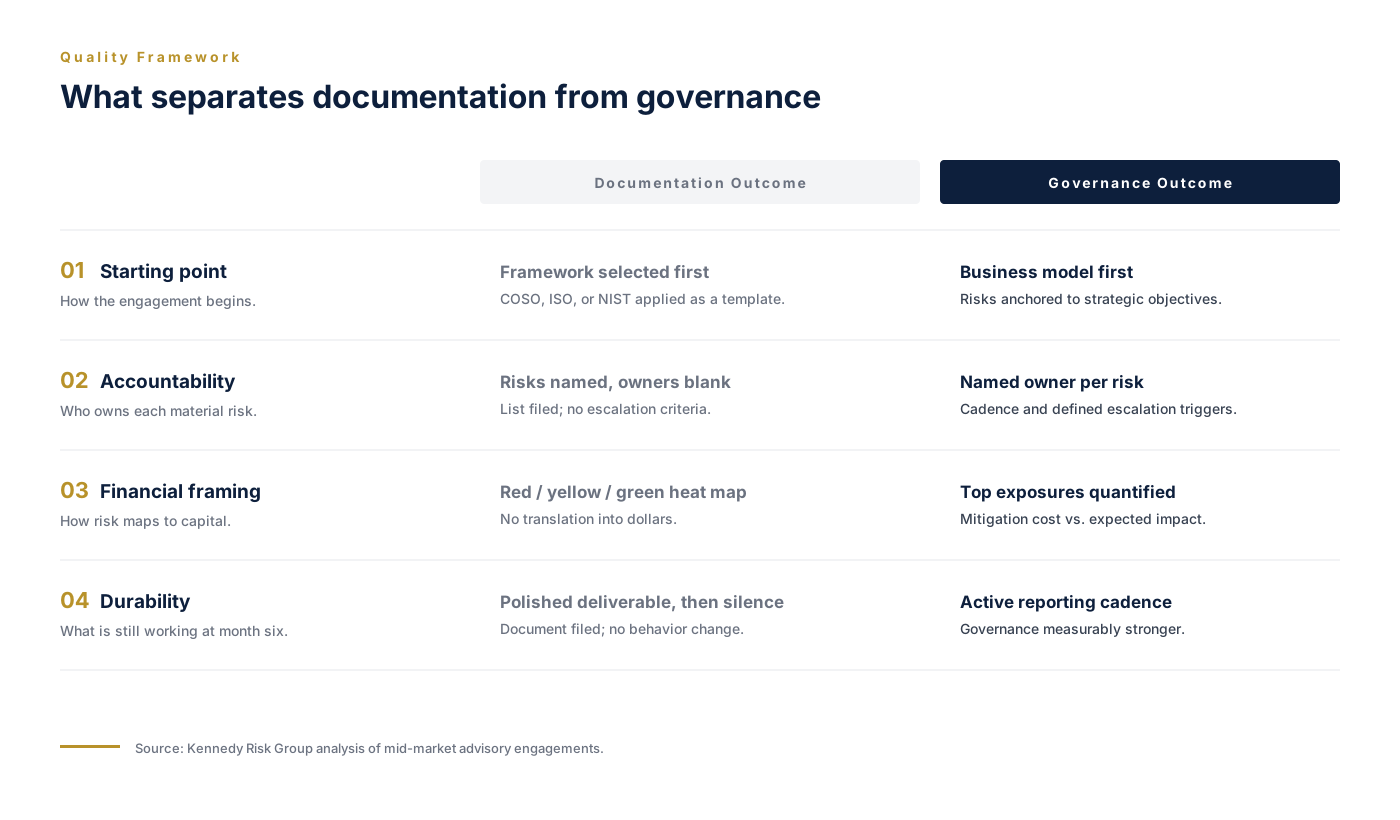
The 4 Markers of a High-Quality Risk Advisory Engagement
It starts with your business, not a framework
A risk advisory engagement that begins by selecting a framework, COSO, ISO 31000, NIST, before understanding your business model, your strategic priorities, and your actual operating risks has the process backwards.
Frameworks are useful organizing structures. They are not diagnostics. The first meaningful output of a risk advisory engagement should be a clear articulation of the risks most material to your specific business, not a generic taxonomy applied from a template.
According to RIMS, organizations that anchor risk identification to strategic objectives identify materially different risk profiles than those that start from a generic framework. The difference determines which risks get resources and which get overlooked.
It produces named owners, not just named risks
A risk advisory engagement that ends with a prioritized list of risks but no ownership structure has delivered half the work. Risk identification without accountability assignment is documentation, not governance.
Every material risk that emerges from the engagement should have a named owner, a monitoring cadence, and defined escalation criteria. A one-page risk ownership matrix is more valuable than a fifty-page risk register with no owners assigned.
It connects risk to financial exposure
The CFO should be able to look at the output of a risk advisory engagement and see, in financial terms, what the organization's top exposures are, what the cost of mitigation is relative to the expected impact of the risk, and where current insurance coverage leaves gaps.
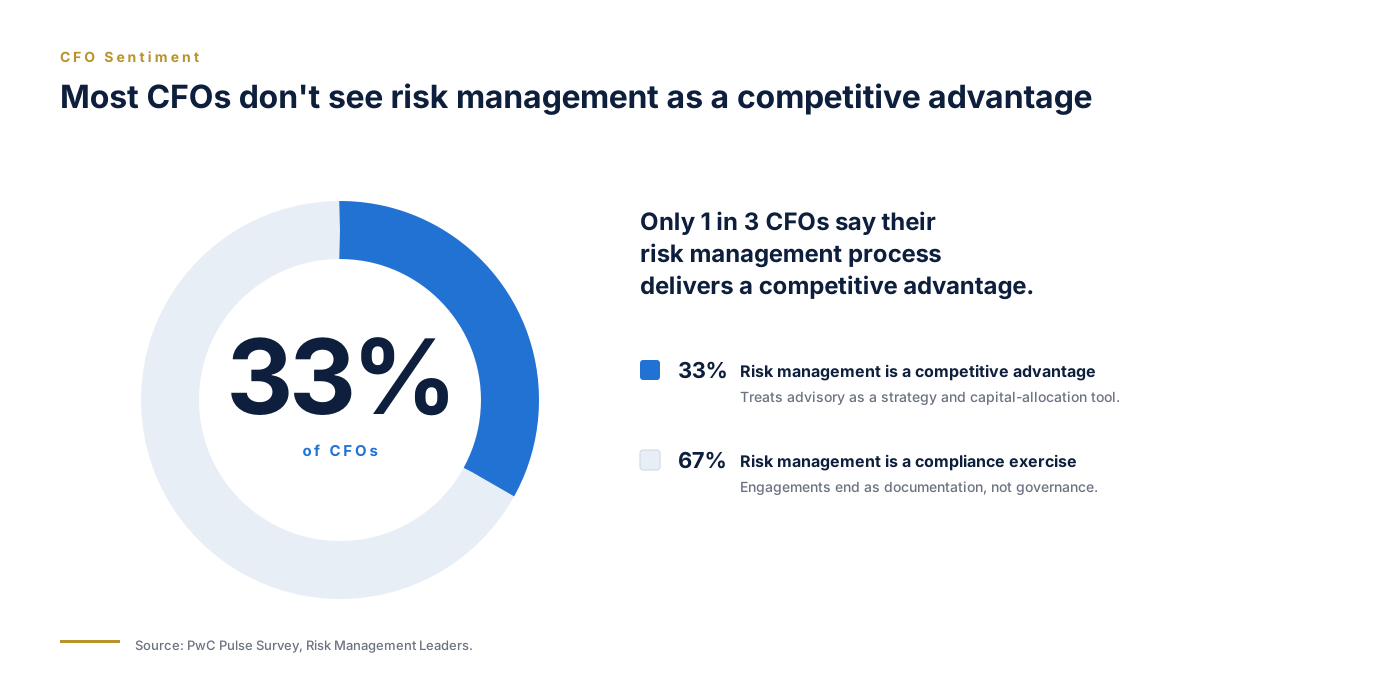
According to the PwC Pulse Survey, only 33% of CFOs believe their current risk management processes provide a significant competitive advantage. The majority are still treating risk advisory as a compliance exercise rather than a tool for capital allocation decisions. If the deliverable is a heat map with red, yellow, and green classifications, the engagement has not done the translation work that makes risk data useful.
It builds something that outlasts the engagement
The measure of a good risk advisory engagement is not the quality of the final presentation. It is whether the organization's risk governance is measurably stronger six months after the engagement ends.
That means the ownership structure is active, the cadence is being maintained, and leadership has a reporting mechanism that keeps risk intelligence current. An engagement that produces a strong deliverable but no lasting governance change has created a document, not a program.
According to the IIA Foundation's 2025 ERM study, fewer than half of respondents say risk awareness truly permeates their organizations, a signal that most advisory work is not producing durable governance change.
What to Ask Before You Hire
If you are evaluating a risk advisory engagement, these four questions will tell you more than any proposal document.
What will we be able to do after this engagement that we cannot do today? The answer should describe a governance capability, not a deliverable. "You will have a risk register" is a documentation answer. "Your CFO will have a structured view of your top financial exposures with named owners and escalation protocols" is a governance answer.
How do you define success at the end of the engagement? If the answer is primarily about deliverables, that is a signal. If the answer describes measurable changes in how risk is managed and reported, that is the right orientation.
What does your ongoing support look like after delivery? Risk governance requires maintenance. An advisor who has no answer to this question is not thinking about the governance problem. They are thinking about the project.
Have you worked with companies our size? Mid-market risk advisory is a different practice than enterprise risk management consulting. The governance structures, resource constraints, and organizational dynamics are materially different. An advisor who has only worked with Fortune 500 organizations will bring assumptions that do not fit your context.
What a Right-Sized Engagement Looks Like
For a mid-market company building a risk governance function for the first time, a well-structured advisory engagement typically covers four to eight weeks, produces a clear risk prioritization aligned to business strategy, establishes an ownership and escalation structure, and delivers a reporting format the CFO can use with the board.
It does not require a year-long implementation, a new software platform, or a dedicated internal risk team to execute.
Kennedy Risk Group's Risk Clarity Sprint is designed for exactly this context, a focused engagement that gives mid-market leadership the governance foundation they need without the overhead that makes enterprise risk programs impractical at this scale.
Key Takeaways
- Most risk advisory engagements fail not because of bad expertise, but because neither side defined what governance success looks like.
- A risk advisory engagement should produce named owners, escalation protocols, and financial exposure quantification, not just a risk register.
- Only 33% of CFOs believe their risk management processes provide competitive advantage. The majority are still treating advisory as compliance, not strategy.
- Before hiring a risk advisor, ask what governance capability you will have after the engagement that you do not have today.
- Mid-market risk advisory is a different practice than enterprise consulting. Make sure your advisor has worked at your scale.
Where to Start
If you are evaluating a risk advisory engagement, or trying to judge whether the one you are already running is producing governance rather than documentation, the useful first step is an honest read on where your program stands today. The KRG Board-Ready Risk Reporting Scorecard gives you a tier-level read in seven questions and about two minutes, with no email required to see your score. If you already know you need outside help, the ERM Program Diagnostic is a one-to-two-week fixed-fee engagement built for mid-market organizations, and the fee is credited toward any engagement that follows.
Take the Board-Reporting Scorecard Explore the ERM Diagnostic
Frequently Asked Questions
What is a risk advisory engagement?
A risk advisory engagement is outside help to identify, prioritize, and build governance structures around an organization's material risks. Done well, it produces three things: a clearer picture of what the organization is actually exposed to, an ownership and escalation structure that makes that exposure manageable, and a reporting framework that keeps leadership and the board informed on an ongoing basis. It is not a risk register, a compliance audit, or a software implementation, and it is not a one-time deliverable that gets filed and forgotten.
How is risk advisory different from internal audit?
Internal audit tests whether controls are working and reports what it finds. Risk advisory decides which risks matter enough to control in the first place, then builds the ownership and escalation structure around them. Audit provides assurance over a program. Advisory helps design one. The two functions work together, but a firm running audit procedures is not doing advisory work, and a mid-market company that needs governance built will not get it from an assurance engagement.
How long should a risk advisory engagement take for a mid-market company?
For a mid-market company building a risk governance function for the first time, a well-structured engagement typically runs four to eight weeks. That is enough time to produce a risk prioritization aligned to business strategy, establish an ownership and escalation structure, and deliver a reporting format the CFO can use with the board. It does not require a year-long implementation, a new software platform, or a dedicated internal risk team to execute.
What should a risk advisory engagement deliver?
Named owners rather than just named risks, a monitoring cadence and defined escalation criteria for each material risk, and a translation of the top exposures into financial terms the CFO can act on. A one-page risk ownership matrix is more valuable than a fifty-page risk register with no owners assigned. If the engagement ends with a document rather than a working structure, it has delivered half the work and you will pay again to finish it.
How do you know whether a risk advisory engagement worked?
The measure is not the quality of the final presentation. It is whether the organization's risk governance is measurably stronger six months after the engagement ends: the ownership structure is active, the reporting cadence is being maintained, and leadership has a mechanism that keeps risk intelligence current. An engagement that produces a strong deliverable but no lasting governance change has created a document, not a program.