Compliance
Understanding Compliance Consulting for Mid-Market CFOs
Learn how compliance consulting helps mid-market CFOs build proactive, scalable compliance programs that reduce risk and support growth.
By Eric Kennedy · Thu Apr 02 2026 · 9 min read

Compliance isn't just a checkbox anymore, and mid-market finance leaders are feeling that pressure acutely. Regulatory compliance consulting has become one of the most critical investments a growing company can make, yet many organizations still treat it as a back-office function rather than a strategic asset.
For CFOs, heads of audit, and VPs of finance, the stakes are real. Regulatory demands are intensifying, while internal teams are stretched thin and the cost of getting it wrong (fines, reputational damage, operational disruption) continues to climb.
A well-structured compliance program doesn't just reduce risk; it creates competitive advantage. The question worth asking is whether your current program is built to keep pace, or whether it's quietly falling behind.

The Decision: Is Your Compliance Program Reactive?
Most mid-market organizations don't set out to build a reactive compliance program. It just happens. Teams respond to audits, patch policy gaps after incidents, and scramble when regulators shift the rules. The result? A risk and compliance posture that's perpetually behind the curve.
A few telltale signs your program has drifted into reactive territory:
- Compliance reviews happen after problems surface, not before
- Leadership treats audits as events rather than ongoing processes
- There's no clear owner for emerging regulatory changes
In practice, reactive programs tend to cost more, in remediation, penalties, and lost executive time. Today's finance leaders are increasingly expected to move beyond backward-looking compliance into forward-thinking strategic oversight.
A reactive compliance program isn't a resources problem. It's a systems and maturity problem. Recognizing which category you're in is the essential first step.
That evaluation process deserves a closer look.
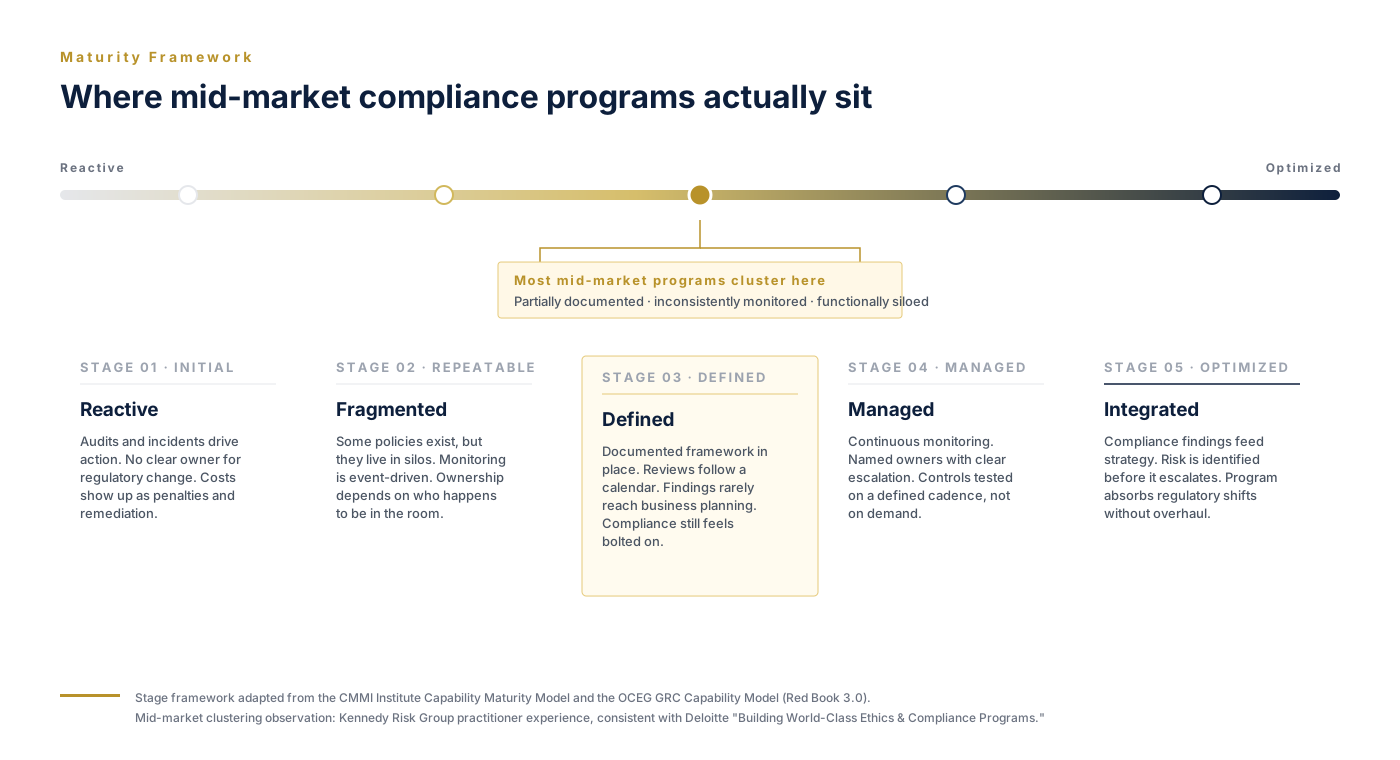
Stage framework adapted from the CMMI Institute Capability Maturity Model and the OCEG GRC Capability Model (Red Book 3.0). Mid-market clustering reflects Kennedy Risk Group practitioner experience, consistent with Deloitte's "Building World-Class Ethics & Compliance Programs".
Evaluating Maturity: Assessing Compliance Program Quality
Knowing your program is reactive is one thing, understanding where it falls on the maturity spectrum is another. Effective compliance risk management isn't binary. It exists on a continuum, from purely firefighting at one end to fully integrated, strategic oversight at the other.
When the U.S. Department of Justice evaluates whether a corporate compliance program is genuinely effective (the test that determines whether prosecutors recommend charges or leniency), they apply three fundamental questions, codified in the DOJ's Evaluation of Corporate Compliance Programs (Updated September 2024):
- Is the program well-designed?
- Is it adequately resourced and empowered to function effectively?
- Does it work in practice?
Each question carries a specific set of sub-topics that prosecutors weigh, risk assessment, policies, training, third-party diligence, board access, autonomy, consequence management, root-cause analysis, and continuous improvement, among others. The framework below summarizes what's actually examined.
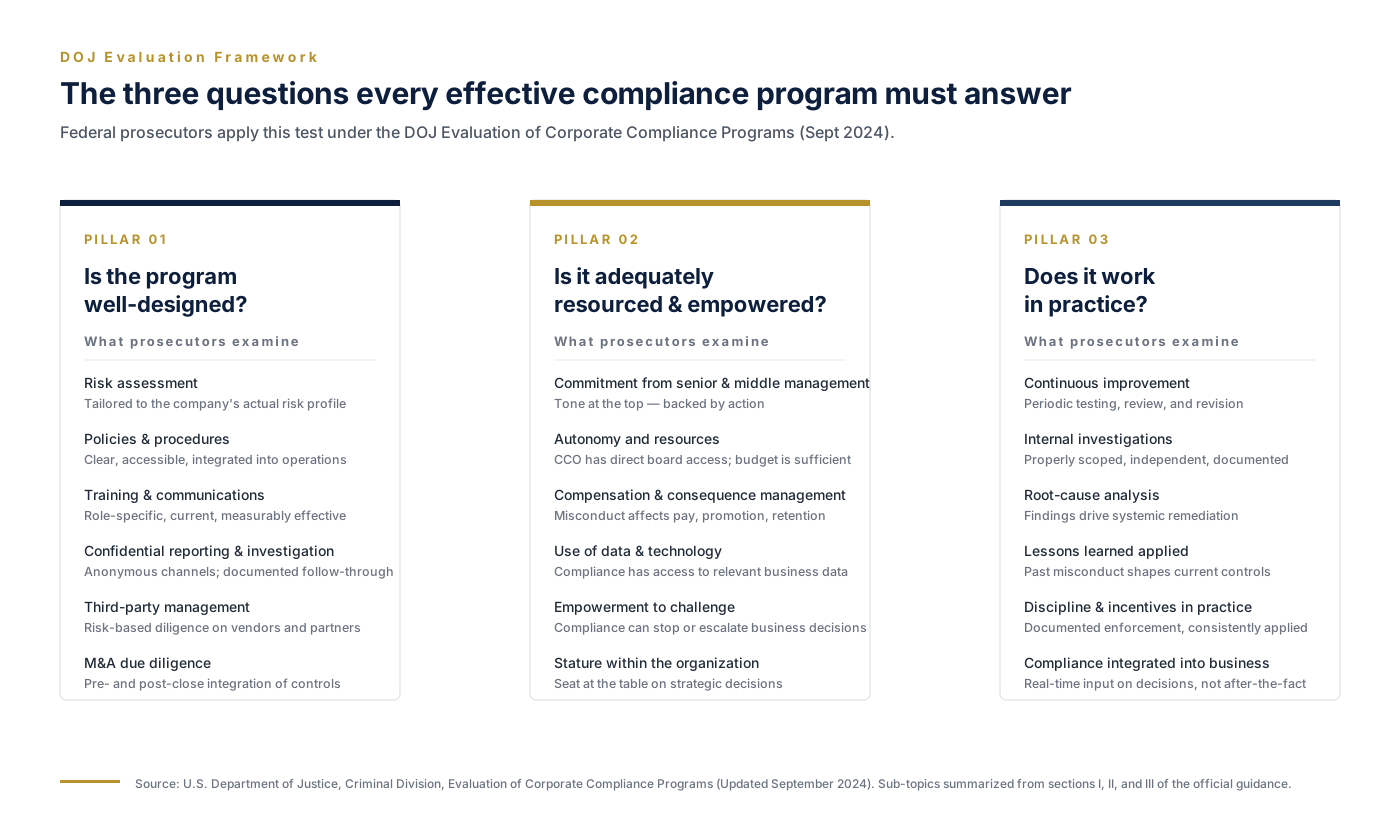
Source: U.S. Department of Justice, Criminal Division, Evaluation of Corporate Compliance Programs (Updated September 2024). Sub-topics summarized from the official guidance.
In practice, most mid-market organizations cluster somewhere in the middle on each pillar, partially documented, inconsistently monitored, and functionally siloed. That middle ground carries real risk without the efficiency gains of a mature program.
A compliance program that can't measure itself can't improve itself. Honest assessment against the DOJ framework is the foundation everything else builds on.
What Good Compliance Looks Like: A Benchmark for Success
Once you've assessed where your program sits against each of the three DOJ pillars, the natural next question is: what does great actually look like?
A mature compliance function isn't just about staying out of trouble. It's about turning compliance risk assessment into a strategic input for decision-making.
In practice, high-performing programs share a few defining traits: risk is identified before it escalates, controls are tested regularly rather than on-demand, and compliance findings feed directly into business planning.
Good compliance doesn't just protect. It enables.
That shift in mindset, however, often requires the right external expertise to achieve, which brings its own set of considerations.
Trade-offs and Alternatives: Challenges in Compliance Consulting
Risk and compliance consulting delivers real value, but it's not without trade-offs worth acknowledging honestly.
The most common challenge is internal resistance. Finance and operations teams can perceive outside consultants as a threat to their authority rather than a resource. Without executive sponsorship, even the most rigorous compliance risk assessment can stall before implementation.
Cost is another consideration. Mid-market companies often weigh consulting fees against stretched internal budgets, questioning whether the investment justifies the return, particularly when regulatory pressure feels manageable today.
However, the alternative carries its own price tag. The Ponemon Institute's "True Cost of Compliance with Data Protection Regulations" study, conducted with Globalscape across 53 multinational organizations, found that the average annual cost of compliance is $5.47 million: while the average cost of non-compliance is $14.82 million, a 2.71× multiple. Non-compliance costs rose 45% from the original 2011 baseline.
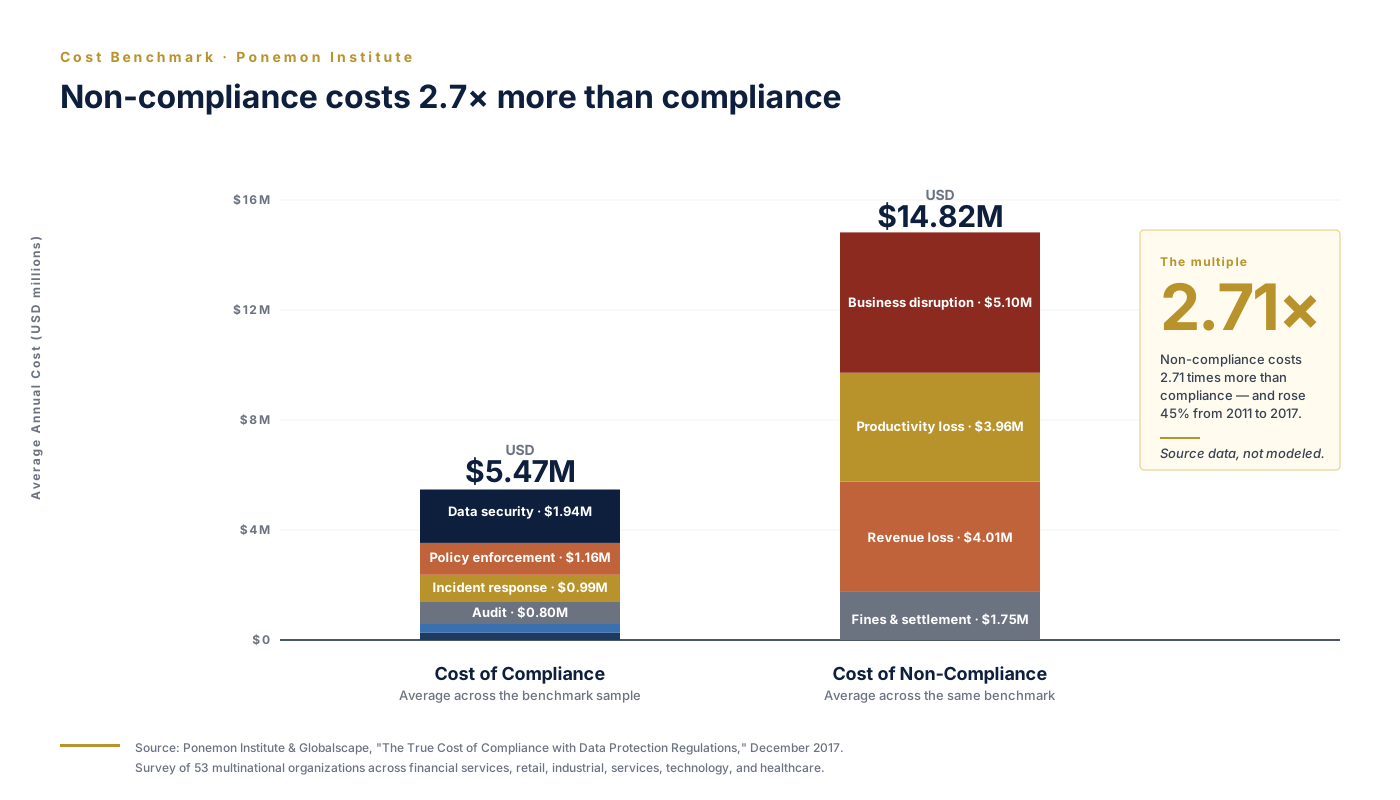
Source: Ponemon Institute & Globalscape, "The True Cost of Compliance with Data Protection Regulations," December 2017. Cost categories (business disruption, productivity loss, revenue loss, fines and settlement) are defined in the original report.
The real question isn't whether to invest, but how to structure that investment strategically, which is exactly where the right consulting partner makes all the difference.
Leveraging Compliance Consulting: Creating Value in Mid-Market Companies
Compliance consulting isn't just a cost center. It's a genuine lever for business value when applied strategically.
Mid-market companies occupy a particularly interesting position here: they face regulatory complexity comparable to larger enterprises but rarely have the internal bench strength to manage it alone.
In practice, the organizations that extract the most value from compliance consulting treat outside advisors as extensions of their finance and audit functions, not one-time fixers. This approach transforms compliance from a defensive exercise into a competitive differentiator.
Mid-market CFOs who partner with client-centric advisors consistently report stronger financial controls and faster decision-making cycles.
The most resilient compliance programs don't just meet today's requirements. They're built to absorb tomorrow's regulatory shifts.
Future Implications: Adapting to Regulatory Changes
The regulatory landscape isn't slowing down. It's accelerating. For mid-market finance leaders, financial compliance requirements are growing more complex with each passing year, driven by evolving tax codes, expanded ESG reporting expectations, data privacy mandates, and increased scrutiny from regulators at every level.
What's a common pattern in resilient organizations? They treat regulatory change as a planning input, not a surprise.
Staying ahead typically means:
- Monitoring regulatory pipelines, not just current requirements
- Building flexible processes that absorb change without full-scale overhauls
- Engaging compliance consulting partners who track industry-specific developments
As flexible staffing and advisory models continue gaining traction, mid-market companies are increasingly positioning outside expertise as a standing resource, not a break-glass solution.
The organizations that thrive won't just react to change; they'll anticipate it.
Key Regulatory Compliance Consulting Takeaways
Building a sustainable compliance strategy for mid-market organizations isn't a one-time project. It's an ongoing discipline. Here's what finance leaders should keep in mind:
- Reactive compliance is a liability. Waiting for audits or regulatory notices to drive action creates unnecessary risk and cost, Ponemon benchmarks the multiple at 2.71×.
- Good compliance programs are proactive, scalable, and integrated into daily operations, and answer "yes" to all three DOJ evaluation questions.
- Compliance consulting delivers measurable value by closing gaps, strengthening controls, and freeing internal teams to focus on growth.
- Regulatory change is accelerating, and mid-market companies need flexible frameworks that can adapt without constant rebuilding.
The strongest programs treat compliance not as a burden, but as a signal of organizational maturity, and that mindset starts at the top.
Engage with Kennedy Risk Group
Compliance doesn't have to feel like a burden your team carries alone. Whether you're reassessing a reactive program, building out a formal compliance risk assessment process, or simply trying to get ahead of what regulators may require next, having the right partner makes a measurable difference.
Kennedy Risk Group works with mid-market finance leaders (CFOs, heads of audit, and VPs of finance) to deliver executive compliance advisory support that's practical, not theoretical. The goal isn't more complexity. It's clarity, confidence, and a compliance function that actually protects and enables the business.
Curious what a stronger compliance posture could look like for your organization? Let's start the conversation.
Turning Compliance Into a Competitive Advantage
The through-line across every section of this discussion is straightforward: compliance risk management works best when it's proactive, integrated, and treated as a strategic asset, not a fire drill.
For mid-market CFOs, heads of audit, and VPs of finance, the stakes are real. Reactive programs create exposure. Fragmented oversight creates blind spots. But organizations that invest in structured compliance risk assessment services and ongoing risk and compliance consulting consistently find themselves better positioned, operationally, financially, and reputationally.
Key takeaways to carry forward:
- Recognize the early signs that your program has become reactive
- Use regulatory compliance consulting to close gaps before regulators do
- Build compliance into strategic planning, not just operational checklists
- Treat compliance partners as long-term collaborators, not transactional vendors
Compliance maturity is a journey, and the firms that commit to it now will be the ones that lead their markets tomorrow.
Frequently Asked Questions
What are the benefits of integrating compliance risk management into the overall business strategy?
Strategic integration transforms compliance from a cost center into a decision-support tool. Leaders gain cleaner visibility into operational risk, faster responses to regulatory shifts, and stronger positioning during audits or investor due diligence. Companies that embed compliance risk management into planning cycles tend to allocate resources more efficiently and encounter fewer costly surprises.
How can mid-market companies assess the maturity of their current compliance programs?
A structured compliance risk assessment gives leadership an honest snapshot of maturity, examining policy documentation, monitoring frequency, escalation pathways, and how well corporate risk management connects to day-to-day decisions. A common pattern is that mid-market companies score well on documentation yet poorly on execution.
What are the potential risks of not updating compliance strategies in response to regulatory changes?
Outdated compliance frameworks create a compounding risk effect. What starts as a minor gap in policy coverage can escalate into audit findings, regulatory penalties, or reputational damage. Stagnant programs also erode internal credibility, signaling to auditors, investors, and boards that risk and compliance functions aren't keeping pace with the business.
How can VPs of finance leverage compliance consulting to improve operational efficiency?
Consultants often identify overlapping approval processes or manual controls that consume significant staff hours without adding meaningful protection. Consolidating those touchpoints reduces operational drag while strengthening the control environment. Compliance risk management also brings clearer accountability structures, defining who owns each obligation and when.