Enterprise Risk Management
What Operational Risk Management Actually Means
Most mid-market companies have a risk register, a checklist, and a vague sense someone is watching. That is not risk management. That is risk documentation, and the difference is costing them.
By Eric Kennedy · Tue Apr 21 2026 · 9 min read

Most mid-market companies think they have operational risk management covered. They have got a risk register somewhere, a compliance checklist that gets reviewed annually, and a general sense that someone, somewhere, is keeping an eye on things. That is not risk management. That is risk documentation, and there is a costly difference.
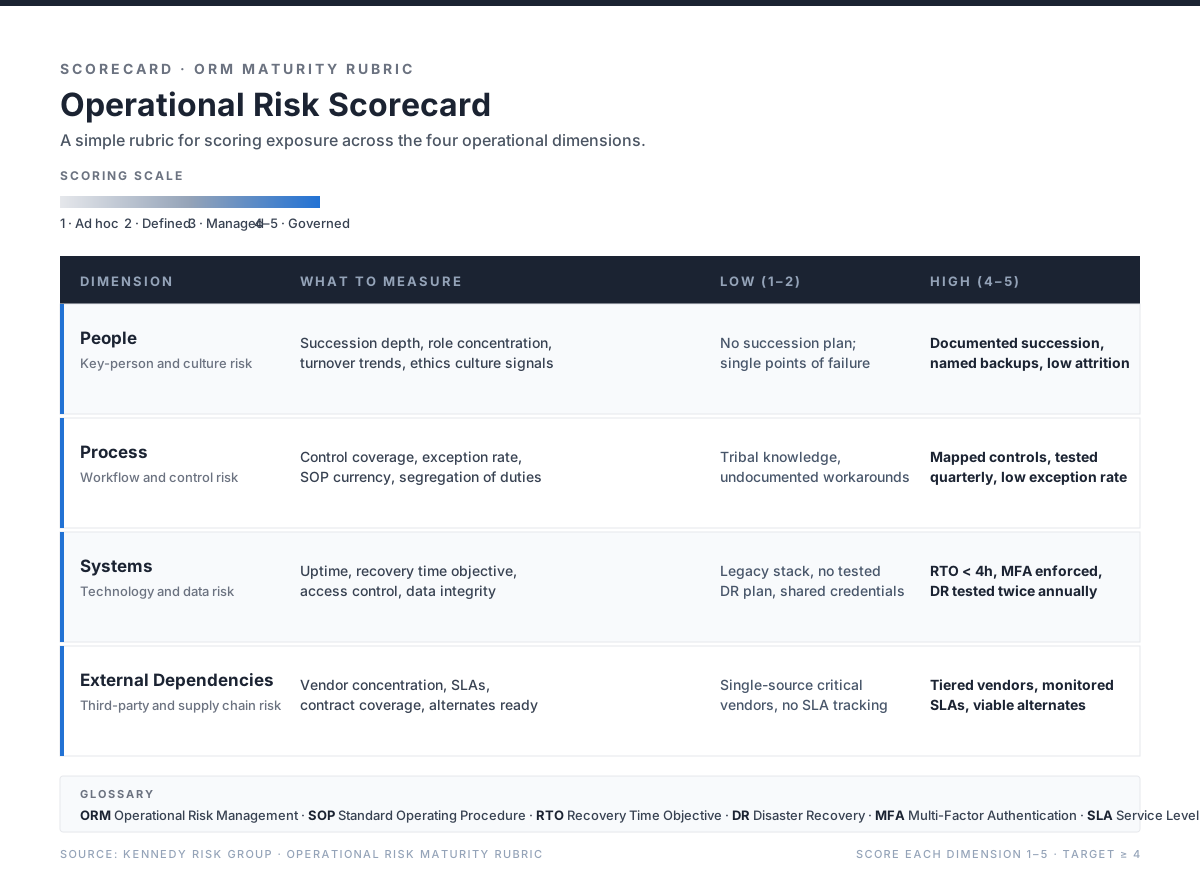
Operational risk management is the disciplined process of identifying, assessing, and governing the uncertainties that can disrupt how a business actually runs: its people, processes, systems, and external dependencies. Done well, it is not a compliance exercise. It is a financial and strategic governance function that directly affects your bottom line.
The companies that treat risk as a financial variable, not just a legal one, are the ones that don't get blindsided.
According to a Nationwide survey of mid-market business owners, nearly half feel unprepared for the risks they face, yet most have no formal mechanism for turning that awareness into governance. That gap between perceived coverage and actual exposure is exactly where problems compound quietly, until they don't.
Understanding what operational risk management truly means is the first step. Understanding why so many mid-market firms get it wrong is where the real conversation begins.
The Documentation Trap: Why Your ORM is Failing
Here is the uncomfortable truth: a well-formatted risk register isn't the same as a functional risk program. For many mid-market companies, operational risk management has quietly become a documentation exercise, and that is precisely where the failure begins.
Genuine ORM isn't a list of threats ranked by likelihood. It is the governance of uncertainty, a structured, ongoing process that connects risk exposure to financial performance, leadership decision-making, and strategic outcomes. When that connection breaks, the program becomes a compliance artifact rather than a management tool.
The NC State ERM Initiative identifies a telling pattern in how companies mismanage risk: they treat it as a discrete activity rather than a continuous governance function. Mid-market firms are especially vulnerable to this trap. Without dedicated risk management consulting infrastructure or a full-time Chief Risk Officer, risk often defaults to whoever owns compliance, and compliance defaults to check-the-box.
The result is a program that satisfies auditors but fails executives.
What changes everything is reframing risk as a financial variable, not just a legal one. Every unmitigated operational risk carries a quantifiable cost in capital exposure, margin compression, or leadership distraction. That reframing is the foundation of strategic governance.
That governance, however, only works when risk has a clear path to the top of the organization. Which raises a harder question about where risk actually sits in your structure.
The Governance Gap: Why Risk is Buried Too Deep
Even when a mid-market company has a risk function, it often sits two or three levels below where decisions actually get made. That organizational distance isn't just an inefficiency, it is a structural failure.
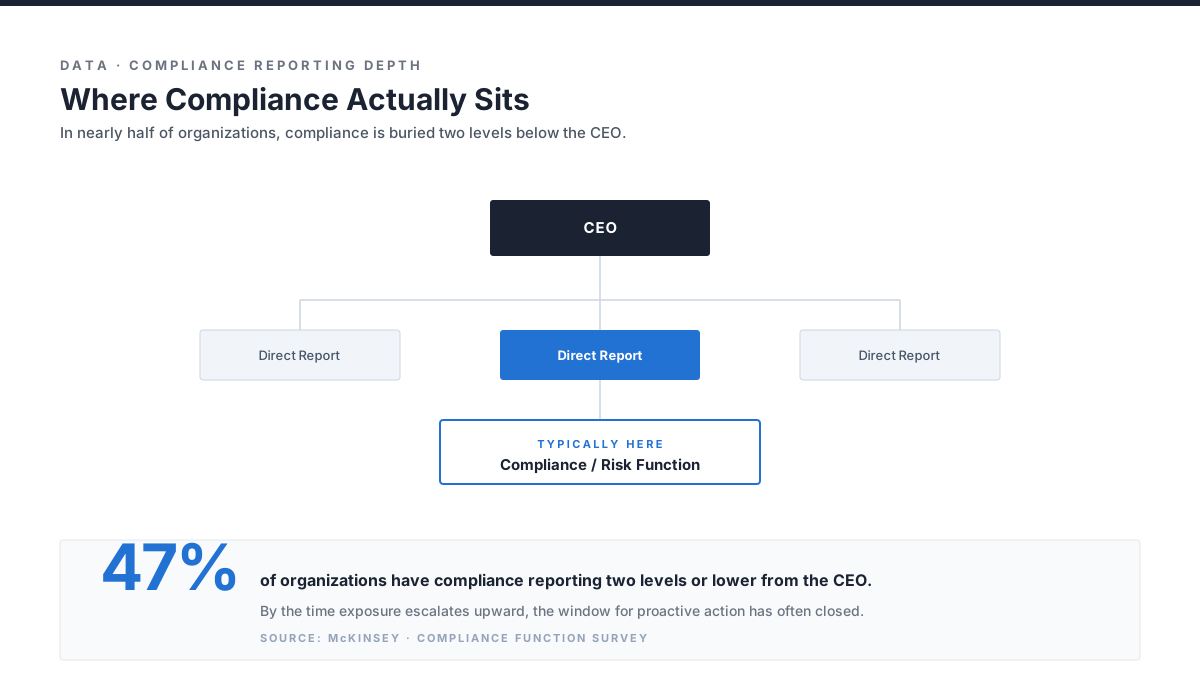
According to McKinsey, in nearly half of organizations (47%) the compliance function is managed two levels below the CEO or lower, structurally disconnected from the decisions that shape how risk actually gets managed.
The "Two-Level" Problem
What typically happens is this: a risk or compliance manager identifies an emerging exposure, escalates it to their direct supervisor, and it stalls somewhere in middle management. By the time it reaches anyone with budget authority or strategic influence, the window for proactive action has closed. Risk functions that don't report directly to the CEO or CFO are structurally positioned to react, not govern.
Managing Risk vs. Governing Risk
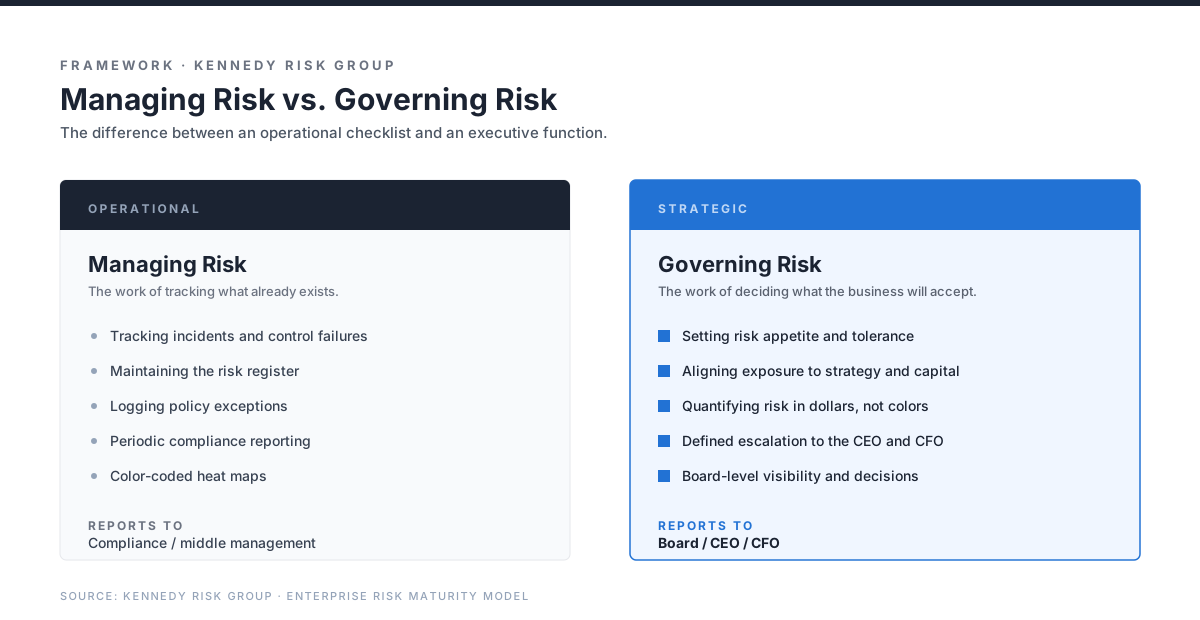
There is a meaningful distinction here. Managing risk is operational: tracking incidents, maintaining registers, logging control failures. Governing risk is strategic: setting risk appetite, aligning tolerance levels to business objectives, and ensuring the board has visibility to make informed capital decisions.
Most mid-market companies are doing the former while calling it the latter.
When risk management services are disconnected from executive governance, boards default to viewing risk as a cost center. That framing leads to underinvestment precisely when proactive exposure management would generate the most value.
The board that treats risk as overhead will always be surprised by the risks it ignored. Understanding what governance-level risk oversight actually looks like in practice sets the foundation for what a real ORM program demands, which is where the real work begins.
What a Real ORM Program Looks Like
The shift from performative risk management to functional risk governance starts with one fundamental change: replacing color-coded heat maps with dollar-denominated exposure figures.
Red, yellow, and green classifications tell leadership that a risk exists. They don't tell the board how much capital is at risk, what the probability-weighted financial impact looks like, or how that exposure interacts with the company's debt covenants. That is a meaningful difference, especially when a single operational failure can trigger a liquidity event.
The CFO is the only executive positioned to bridge that gap. Finance leadership understands how operational disruptions translate into margin compression, covenant strain, and borrowing costs. When the CFO owns or co-owns the risk conversation, risk data stops being a compliance artifact and starts driving real decisions.
The gap is widespread: PwC's Pulse Survey found that 75% of risk executives say financial pressures are limiting their ability to invest in advanced technologies to assess and monitor risks, meaning most companies are underfunding the exact function that protects their margins.
This matters for compliance risk management too. Regulatory failures carry financial consequences (fines, remediation costs, reputational damage) that belong on the balance sheet, not in a separate audit committee slide deck.
Proactive ORM also has a direct relationship with a company's debt profile. Organizations that quantify and actively manage operational exposure tend to maintain stronger credit positions and carry less reactive debt from unplanned operational losses.
That financial discipline is what makes risk data genuinely useful for capital allocation. When leadership can see which operational risks carry the highest expected financial impact, investment decisions, whether in technology, headcount, or controls, become measurably more strategic.
Getting there, however, requires a structured approach to risk governance that most mid-market companies haven't yet built. That is where three specific pillars make the difference.
Three Pillars of High-Maturity Risk Governance
A functional ORM program isn't built in a single initiative. It develops through deliberate structural choices that compound over time. Once you have replaced heat maps with dollar-denominated risk data, as outlined in the previous section, the next step is embedding that discipline into three core governance mechanisms.
Pillar 1: Dynamic Stress Testing
Static annual risk reviews don't reflect how operational risk actually behaves. High-maturity organizations run scenario-based stress tests on a rolling basis, simulating supply chain disruptions, key-person departures, system outages, and margin compression simultaneously. The goal isn't prediction. It is preparedness. What typically happens is that companies only stress-test their balance sheets, leaving operational assumptions entirely unexamined.
Pillar 2: Defined Risk Appetite
Risk appetite isn't a philosophy statement buried in a board deck. It is a set of operational boundaries that finance and business unit leaders actively reference when making decisions. Without a defined appetite, every risk decision defaults to individual judgment, which is inconsistent and unscalable. The failures that follow are rarely exotic. They are ordinary exposures that nobody had the authority to stop.
Pillar 3: Clear Escalation Paths and Reporting Cadence
A risk program without a defined escalation structure isn't a program. It is a suggestion box. Risks get identified at the operational level and stall in middle management before reaching anyone with budget authority or strategic influence. High-maturity organizations fix this by specifying which risk categories trigger executive notification, what format leadership receives that information in, and how frequently the board gets a consolidated view. The question isn't whether your team knows about emerging exposures. It is whether that knowledge reaches the right person in time to matter.
Bridging these maturity gaps is where qualified risk advisory support creates measurable lift. Most mid-market companies have the underlying data. They lack the structured enterprise risk management framework to operationalize it. That is a solvable problem, and solving it is what separates organizations that manage risk reactively from those that use it as a competitive lever.
Key Takeaways
- The companies that treat risk as a financial variable, not just a legal one, are the ones that don't get blindsided.
- The result of treating ORM as documentation is a program that satisfies auditors but fails executives.
- The board that treats risk as overhead will always be surprised by the risks it ignored.
- The CFO is the only executive positioned to bridge the gap between operational risk and capital strategy.
- Risk intelligence only creates value when it reaches the right decision-maker at the right time.
Conclusion: From Compliance Burden to Strategic Asset
Operational risk management isn't a filing system. It is a governance tool, one that, when built correctly, gives leadership teams earlier visibility, sharper decision-making, and a structural advantage that compounds over time.
A mature enterprise risk management framework doesn't slow organizations down. It makes them harder to surprise.
The companies that consistently outperform their peers aren't just better operators. They are better prepared. A risk-aware culture translates directly into faster responses to disruption, fewer costly surprises, and a leadership team that can pursue growth with confidence rather than hesitation. That is not a compliance benefit. That is a competitive one.
The honest question every CFO and Head of Internal Audit should ask right now is: does your current program actually function, or does it just exist?
If you are unsure where your organization stands, that is the right place to start. Kennedy Risk Group offers a practical ERM Program Diagnostic designed to assess your current maturity level and identify where structured improvements will create the most meaningful impact, without the bureaucratic overhead that makes risk programs fail in the first place.
Start with clarity. Build from there.
Frequently Asked Questions
What is operational risk management?
Operational risk management is the disciplined process of identifying, assessing, and governing the uncertainties that can disrupt how a business actually runs: its people, processes, systems, and external dependencies. Done well, it is a financial and strategic governance function, not a compliance exercise.
How is operational risk management different from compliance?
Compliance focuses on meeting regulatory and policy requirements. Operational risk management is broader and more strategic: it quantifies exposure in financial terms, defines risk appetite, and connects risk decisions to capital allocation and business strategy. Compliance is one input to ORM, not a substitute for it.
Why do mid-market companies struggle with operational risk management?
Most mid-market firms lack a dedicated Chief Risk Officer, so the risk function defaults to whoever owns compliance. That structurally pushes risk two or more levels below the CEO, where it becomes a documentation exercise rather than a governance tool that informs executive decisions.
Who should own operational risk management in a mid-market company?
In most mid-market organizations, the CFO is the natural owner or co-owner. Finance leadership already understands how operational disruptions translate into margin compression, covenant strain, and borrowing costs, which is exactly the lens that turns risk data into strategic decisions.
What does a high-maturity ORM program look like?
It quantifies risks in dollars rather than colors, runs dynamic scenario stress tests, has a clearly defined risk appetite that leaders reference when making decisions, and uses structured escalation paths so material exposures reach the CEO, CFO, and board in time to act.
How do I know if my current ORM program is working?
Ask whether your leadership team can name the top five financial exposures the business is carrying right now, in dollars, and whether the board has visibility into them on a defined cadence. If the answer is no, the program exists on paper but is not functioning as governance.