Business Continuity
Transforming Business Continuity Management for Mid-Market Leaders
Ransomware attacks and supplier collapses test the effectiveness of business continuity plans, not their existence. A practical guide for mid-market finance leaders on building resilience that goes beyond the checklist.
By Eric Kennedy · Thu Apr 09 2026 · 14 min read

Ransomware attacks and unexpected supplier collapses test the effectiveness of business continuity plans, not their existence. Business continuity management (BCM) is the strategic process of ensuring organizational operations continue during disruptions. It has evolved from a mere back-office function to a critical strategic imperative for finance leaders, emphasizing proactive accountability before crises occur.
For a closer look at the finance and audit angle, see business continuity planning from a finance and audit perspective.
Mid-market organizations experience the complexity of larger enterprises but lack equivalent resources. Resilient companies treat continuity planning as a dynamic governance function rather than a static document.
A robust continuity program safeguards operations, enhances shareholder value, maintains audit credibility, and upholds executive reputation. Understanding the components of this program is the foundational step towards resilience.
Understanding the Core Elements of Crisis Management Plans
A crisis management plan is an operational framework, not just a static binder. It determines whether an organization responds precisely or panics during disruptions. For mid-market finance leaders, distinguishing a functional plan from a theoretical one is crucial.
Effective crisis management plans comprise four critical elements: command structures, communication protocols, recovery priorities, and leadership accountability.
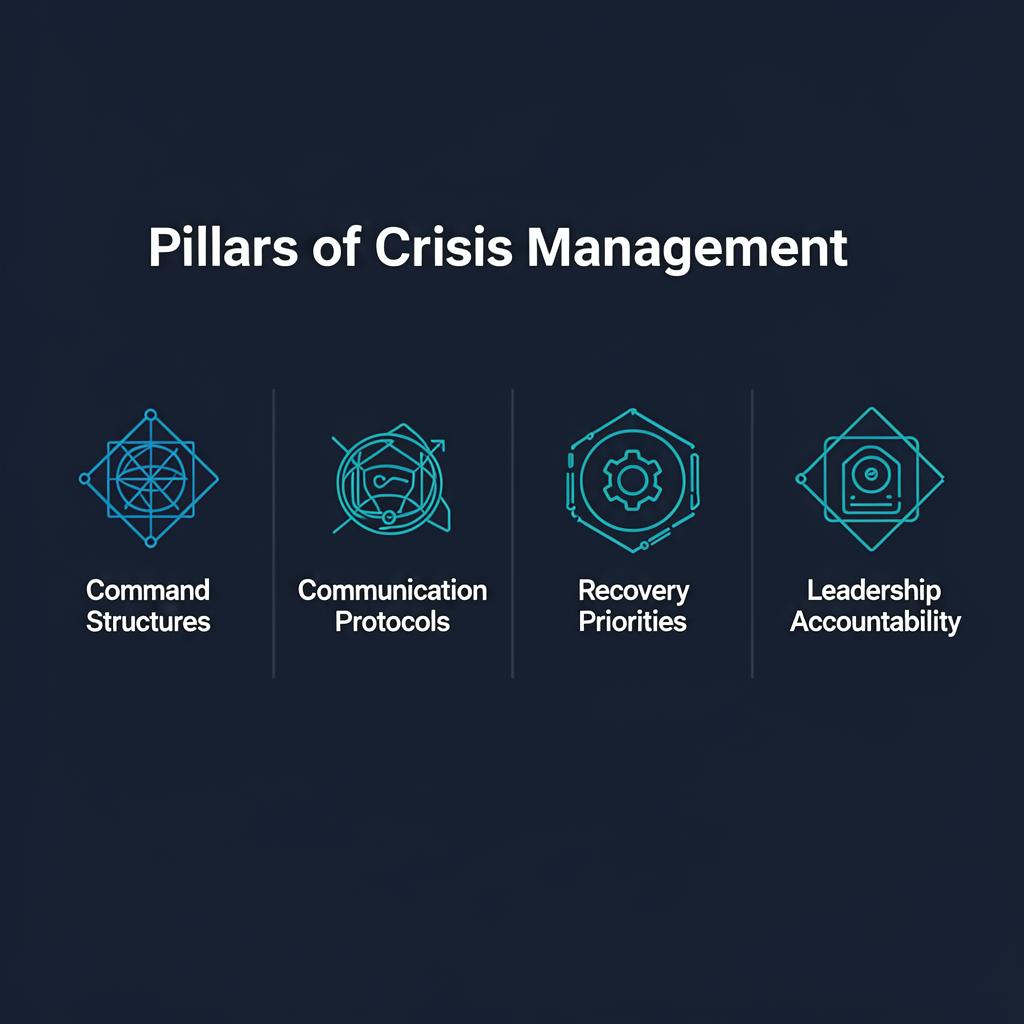
CFOs ensure continuity plans align with financial thresholds and recovery objectives, transcending mere IT timelines. Plans with untested assumptions remain purely theoretical. Organizations often uncover critical gaps only during actual disruptions, highlighting the importance of building these foundational pillars correctly.
Integrating Enterprise Security Risk Management into Continuity Strategies
Enterprise security risk management (ESRM) is a governance discipline that enhances crisis management plans by providing strategic insights, rather than being isolated as an IT function. ESRM refers to the comprehensive approach to managing risks that could threaten an organization's security and operations.
Resilient mid-market organizations view security risk as an ongoing input in continuity planning, not a one-off checklist. Leadership alignment on risk priorities distinguishes quickly recovering organizations from those that struggle.
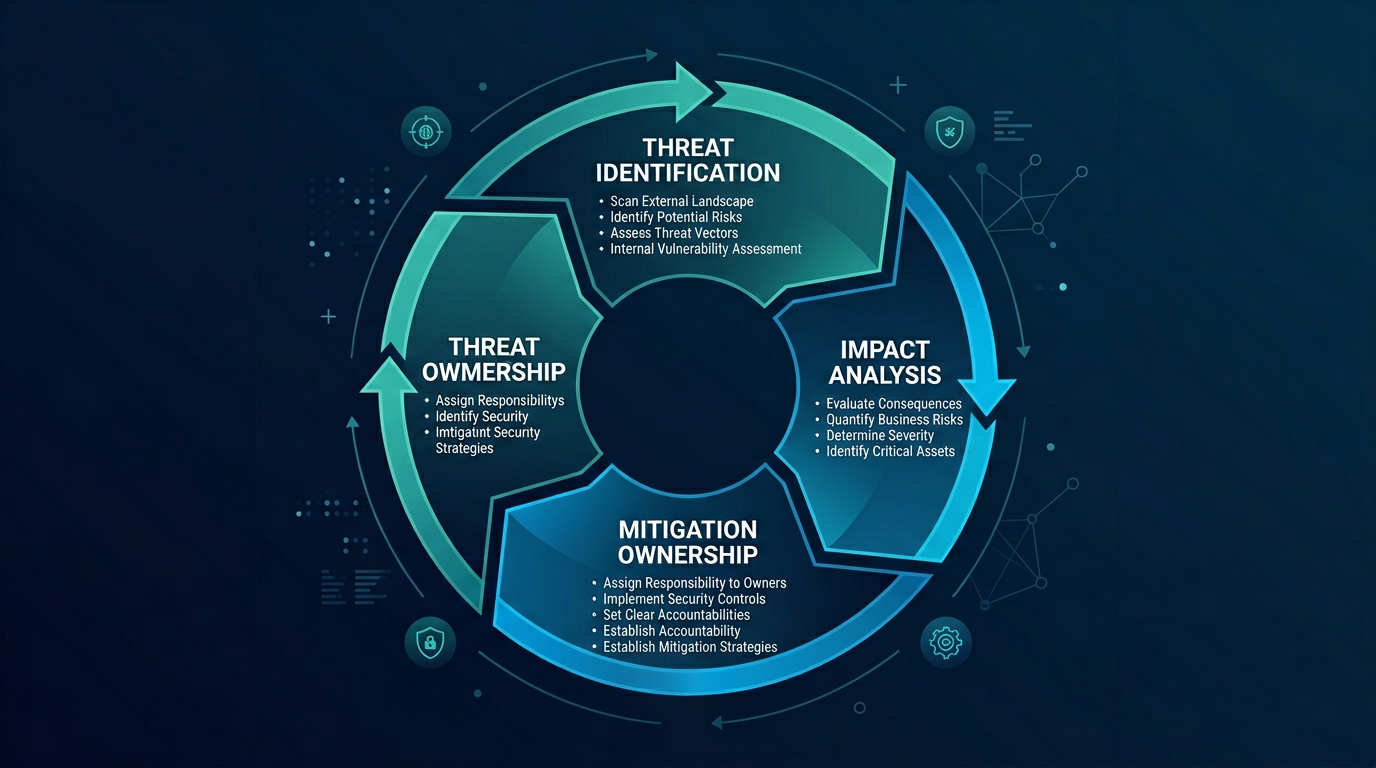
Effective integration connects three areas:
- Threat identification: correlating cyber, operational, and third-party risks with business functions.
- Impact analysis: assessing the financial consequences of threats on downtime, revenue, and compliance.
- Mitigation ownership: allocating responsibility across finance, operations, and IT leadership.
Without this integration, continuity plans may target incorrect scenarios. The objective is ensuring that risk assessments direct preparedness, laying the groundwork for comprehensive security risk evaluations.
Conducting Effective Security Risk Assessments
Security risk assessment is the diagnostic component of your continuity strategy, identifying vulnerabilities before disruptions occur. It involves evaluating the likelihood, impact, and velocity of potential threats.
Finance leaders should prioritize threats affecting all three dimensions, focusing not just on dramatic scenarios but also on cyberattacks, vendor failures, and regulatory disruptions. Aligning risk assessments with financial impact analysis allows organizations to prioritize recovery investments effectively.
A comprehensive security risk assessment quantifies potential business disruption costs.
Assessments are not singular events. As threat landscapes and organizational relationships evolve, scheduling formal annual reassessments and quarterly reviews is essential for maintaining an updated risk picture. This continuous discipline differentiates reactive organizations from resilient ones.
The Role of Testing in Business Continuity Effectiveness
A crisis management plan untested is akin to a theoretical exercise. Testing transforms continuity planning into actionable practice. Without testing, even detailed recovery procedures can falter under real-world conditions.
Effective testing involves incident management, which is the structured process of identifying, escalating, and resolving disruptions before they escalate into full-scale crises. Tabletop exercises, simulation drills, and recovery walkthroughs expose gaps that risk assessments might miss. Organizations that test their continuity plans regularly recover faster than those that don't, as decision-makers are already aware of their roles during disruptions.
Testing also provides governance insights. Results offer finance leaders measurable data to evaluate program maturity and justify ongoing investment. Testing ensures improvements and secures funding, reinforcing the importance of a robust testing discipline.
Preparing for Real Business Disruptions
Strong business continuity governance distinguishes organizations that withstand disruptions from those that falter. Frameworks and testing protocols must translate into readiness for unpredictable events such as supply chain failures, ransomware attacks, regulatory crises, or leadership gaps.
Resilient organizations integrate disruption scenarios as strategic inputs. Engagement from CFOs is critical, as finance leaders best understand which business functions generate revenue, carry regulatory exposure, or support customer commitments, allowing for intelligent recovery prioritization.
Resilience is not built during a crisis but in the planning cycles before one occurs.
This principle should guide every executive-level governance conversation.
Limitations and Considerations
Even the most robust framework has limitations. Testing business continuity plans is crucial, yet resource constraints, competing priorities, and organizational fatigue can limit the frequency and thoroughness of testing. Annual tabletop exercises often fail to replicate the complexity of simultaneous multi-system failures or prolonged regional crises.
Plans can become outdated quicker than reviewed. Changes in personnel, new vendors, and evolving threat landscapes can create blind spots during real disruptions. Over-engineering continuity frameworks may lead to excessive documentation or complex procedures that are impractical under pressure. The aim is clarity, not exhaustive documentation.
These limitations highlight the need for ongoing governance, regular review cycles, and executive sponsorship as enduring commitments.
Key Takeaways
Navigating real business disruptions requires structured thinking and disciplined execution. Finance and risk leaders should focus on:
- Governance driving resilience. Executive ownership transforms continuity planning from compliance to a strategic asset.
- Testing as non-negotiable. A plan untested is merely a document. Regular exercises reveal gaps before crises occur.
- Proportionate frameworks. Align continuity rigor with actual risk profile and resource capacity.
- Integration importance. Siloed plans are ineffective. Connecting business continuity with enterprise risk posture enhances responses.
Organizations that treat continuity as an embedded discipline, evolving with the business, are best prepared for disruptions. Finance leaders should focus on whether current structures can absorb inevitable disruptions.
Building Resilience That Goes Beyond the Checklist
Effective business continuity management answers one question: when disruption arrives (not if), will your organization respond confidently or scramble in the dark?
Finance leaders who treat resilience as an ongoing discipline, not just a compliance checkbox, gain a measurable advantage. This involves embedding your crisis management plan into governance, ensuring enterprise security risk management informs decisions, and scheduling regular security risk assessments.
Incident management protocols tested under realistic conditions differentiate organizations that recover quickly from those that don't.
Key takeaways for finance executives:
- Align continuity planning with financial exposure and recovery priorities.
- Regularly test plans; untested strategies offer false confidence.
- Integrate security risk into board-level governance conversations.
- Treat resilience as a competitive advantage, not overhead.
Frequently Asked Questions
How Can Mid-Market Companies Effectively Implement a Business Continuity Management Plan?
Effective implementation isn't about creating the most elaborate plan but the right plan tailored to an organization's size, risk profile, and operational realities. In practice, successful implementation involves identifying critical business functions, assigning ownership, establishing realistic recovery timelines, and conducting tests. A plan without tested ownership is merely a binder on a shelf.
What Are the Key Components of an Effective Crisis Management Plan for Finance Leaders?
A well-structured crisis management plan specifies decision-making authority, communication responsibilities, and financial continuity when disruptions occur. Core elements include escalation protocols with clear crisis declaration thresholds, communication trees with defined messaging chains, financial continuity procedures for payments, payroll, and reporting, and recovery ownership with defined roles and authority.
How Does Enterprise Security Risk Management Integrate With Business Continuity Strategies?
Enterprise security risk management is the intelligence layer that informs continuity planning, ensuring recovery plans are based on evidence rather than assumptions. A thorough security risk assessment identifies threats most likely to cause operational disruptions, and these findings directly inform the scenarios your continuity plan must address.
What Role Does Testing Play in Ensuring the Effectiveness of a Business Continuity Plan?
A business continuity management plan untested is a liability. Testing turns documented procedures into practiced capability, identifying gaps before real crises occur. Effective testing includes tabletop exercises, functional drills, and full-scale simulations that build organizational memory and validate security risk assessments.